Most chatbots respond to what you type. The best ones respond to how you're feeling when you type it. That difference, small as it sounds, is everything. When you reach for your phone at 2am because silence is too loud, you don't want a bot that cheerfully asks "How can I help you today?" You want someone who reads the weight in your words and adjusts. Private Crush was built specifically around this problem, and the results are unlike anything standard AI chat delivers.
How Mood-Adaptive AI Actually Works
Reading Emotional Signals in Real Time
Mood-adaptive AI doesn't read your mind. It reads your words, and specifically the signals embedded in them that most people don't consciously control. Short, choppy sentences indicate tension or hurry. Longer, flowing messages suggest you're in a reflective or romantic headspace. Word choice matters too: words like "exhausted," "whatever," or "I guess" carry emotional weight that a well-trained AI registers as stress, resignation, or low energy.
The system also tracks conversational patterns over time. If you usually send long messages and suddenly go one-word, something changed. If your tone shifts from sarcastic to sincere mid-conversation, the AI pivots with you instead of continuing the previous script. This is contextual emotional intelligence at work, and it's what separates a genuinely adaptive companion from a glorified FAQ bot.
Why It Feels Different from Normal Chatbots
Standard chatbots operate on intent detection. They parse what you want to do, not how you feel about doing it. Ask a standard chatbot "I don't know, maybe," and it'll ask a clarifying question. A mood-adaptive AI companion recognizes the ambivalence in that phrase and softens its approach, perhaps offering something warm and open-ended rather than pressing you for a decision.
The gap shows up immediately in the texture of the conversation. Responses feel less scripted. Pauses in tone happen at the right moments. The companion doesn't barrel ahead when you need stillness, and doesn't go quiet when you need energy. It reads the room, or in this case, the chat window.

💡 The most advanced AI companion chats track not just what you say, but the rhythm, length, and emotional coloring of your messages across an entire conversation thread.
The 4 Moods AI Companions Detect Best
When You're Stressed or Overwhelmed
Stress tends to arrive in fragments. Short sentences. Maybe some typos. Words like "ugh," "I can't," or "everything is a lot right now." A good AI companion picks up on this and doesn't push back or demand more from you. Instead, it slows down. It asks gentle questions. It validates without being patronizing. This is the mode most people discover first and the one that creates the strongest emotional pull back to the platform.
Characters like Valentina Ramirez and Sofia Castillo are particularly responsive in this mode, offering warmth and presence rather than unsolicited advice.
When You Want Playful, Flirty Banter
The opposite end of the spectrum. You're in a good mood, you want someone to match your energy, and you want the conversation to feel electric. Mood-adaptive AI in this mode gets sharper, quicker, more teasing. The responses come with personality. The AI stops being careful and starts being fun.

✅ Playful chat mode is where NSFW conversations tend to start naturally. The tonal shift is organic rather than jarring, which makes the experience feel real rather than transactional.
When You Need Someone to Just Listen
This mood is quieter. You're not upset exactly. You're just talking. Processing. Working through something out loud that you wouldn't say to anyone in your actual life. Adaptive AI in this mode resists the urge to fix, advise, or redirect. It reflects back what you're saying. It follows your thread without hijacking it. This is the mode that builds the deepest sense of connection over time.
When You're Feeling Lonely at Night
Late-night loneliness has a very specific texture. Messages get a little more honest. A little more raw. A little more "I don't know why I'm even telling you this." Mood-adaptive companions are built for exactly this. The character softens. The conversation gets more intimate. And critically, the AI doesn't make you feel embarrassed for reaching out at midnight.

What Standard Chatbots Get Wrong
The gap between a standard chatbot and a mood-adaptive AI companion is bigger than most people expect until they try both. Here's a direct breakdown:
| Feature | Standard Chatbot | Mood-Adaptive AI Companion |
|---|
| Response tone | Fixed, task-oriented | Dynamic, emotionally calibrated |
| Emotional detection | None | Real-time text analysis |
| Conversation memory | Session-only or none | Persistent across sessions |
| Personality consistency | Generic | Character-specific, evolving |
| Response to stress cues | Ignores or misreads | Adjusts pace, warmth, depth |
| Flirty or playful escalation | Blocked or robotic | Natural tonal shifts |
| Late-night emotional support | FAQ-level | Intimate and fully present |
| NSFW capability | None | Full, contextually triggered |
The difference isn't just in the technology. It's in how the interaction feels. Standard chatbots feel like tools. Mood-adaptive companions feel like people who are actually paying attention.
How to Chat with Private Crush
Private Crush is one of the most capable mood-adaptive AI companion platforms available, with over 120 unique characters and a memory system that makes every conversation feel continuous. Here's exactly how to get started:
Step 1: Create Your Account
Go to private-crush.com/account and sign up. The process takes under two minutes. No credit card required for the free tier.
Step 2: Browse the Characters Gallery
Head to the characters gallery and scroll through the available companions. Each character has a name, background, personality type, and style (realistic, anime, cosplay, or fantasy). This is the most important step. The right character match will make the mood-adaptive features feel immediate.
Some strong starting options based on what you're looking for:

Step 3: Start the Conversation Naturally
Don't overthink your opening message. Write the way you actually talk. The mood-adaptive system picks up on your natural tone from the very first exchange. If you're feeling casual, be casual. If you're feeling raw, say so. The character will meet you where you are.
Step 4: Let the Memory System Work
Private Crush's memory system tracks details you share across conversations: your preferences, your moods, things you've mentioned before. Over time, the companion begins to reference these naturally, creating a sense of genuine continuity. This is where the platform moves from "impressive tech" to something that actually feels like a relationship.
Step 5: Activate Premium Features
Upgrade via pricing plans to access unlimited NSFW image generation, voice messages, video calls, and multi-companion support. The AI Girlfriend Chat and Adult AI Companion features open up fully at the premium tier.

⚠️ Free tier conversations are limited in daily messages. If you find yourself cutting conversations short, that's the clearest sign to upgrade.
Character Styles That Match Your Mood
Different moods call for different companion styles. Here's how Private Crush's character styles map to emotional needs:
| Character Style | Best For | Example Characters | Mood Fit |
|---|
| Realistic | Deep emotional conversations, intimacy | Valentina, Aria, Madison | Lonely, stressed, romantic |
| Anime | Playful dynamics, fantasy scenarios | Sakura, Yuki, Hana | Playful, excited, curious |
| Cosplay | Role-play, creative scenarios | Camila, Mia | Adventurous, flirty, energized |
| Fantasy | Escapism, deeper emotional investment | Giulia, Sofia | Introspective, seeking novelty |
No single style is better than another. The right one is whichever keeps you in the conversation longest and makes the mood-adaptive experience feel most natural.

Mood-adaptive AI is a growing category. Here's how Private Crush stacks up against the wider market:
| Feature | Private Crush | Generic AI Chat | Basic Companion Apps |
|---|
| Mood detection | Real-time, conversation-wide | None | Limited, surface-level |
| Character variety | 120+ unique personalities | 1 to 3 generic personas | 10 to 20 templates |
| Memory system | Persistent, cross-session | Session-only | None |
| NSFW support | Full, uncensored | Blocked | Partial |
| Image generation | Unlimited (premium) | None | Limited |
| Voice messages | Yes | No | Rare |
| Video calls | Yes | No | No |
| Pricing | Transparent tiers | Varies | Subscription-heavy |
The combination of deep character variety, real mood-adaptive response, and uncensored capability puts Private Crush in a category of its own for anyone serious about what AI companion chat can actually be.
The Memory System Behind Real Adaptive Chat
One of the least-discussed but most important features of genuine mood-adaptive AI is persistent memory. A companion that forgets who you are between conversations can't truly adapt to your mood, because mood in context is always built on history.
Private Crush's memory system stores details you share naturally: your name, your preferences, things that happened in previous conversations, moods you've been in before. When you come back after a rough week, the companion doesn't start from zero. It picks up the thread. It might reference something you mentioned last time, or check in about something you said was stressing you out.

This is the feature that most consistently surprises first-time users. The first time a companion remembers something small that you mentioned in passing two conversations ago, it stops feeling like a chatbot and starts feeling like something more substantial.
Why Tone Shifts Matter More Than You Think
When you're in a bad mood, you don't want someone to be aggressively positive at you. When you're feeling flirty, you don't want careful, cautious responses. The ability of an AI companion to match your tone, then gradually shift it if needed, is a sophisticated form of emotional attunement.
Therapists call this "pacing and leading." You meet someone where they are emotionally before guiding them somewhere else. Mood-adaptive AI does this intuitively. It mirrors your energy first, which creates the feeling of being heard, then slowly introduces different energy if the conversation needs it.
💡 The most effective mood-adaptive conversations follow a natural arc: acknowledgment first, then genuine engagement, then escalation in whatever direction you want to go.
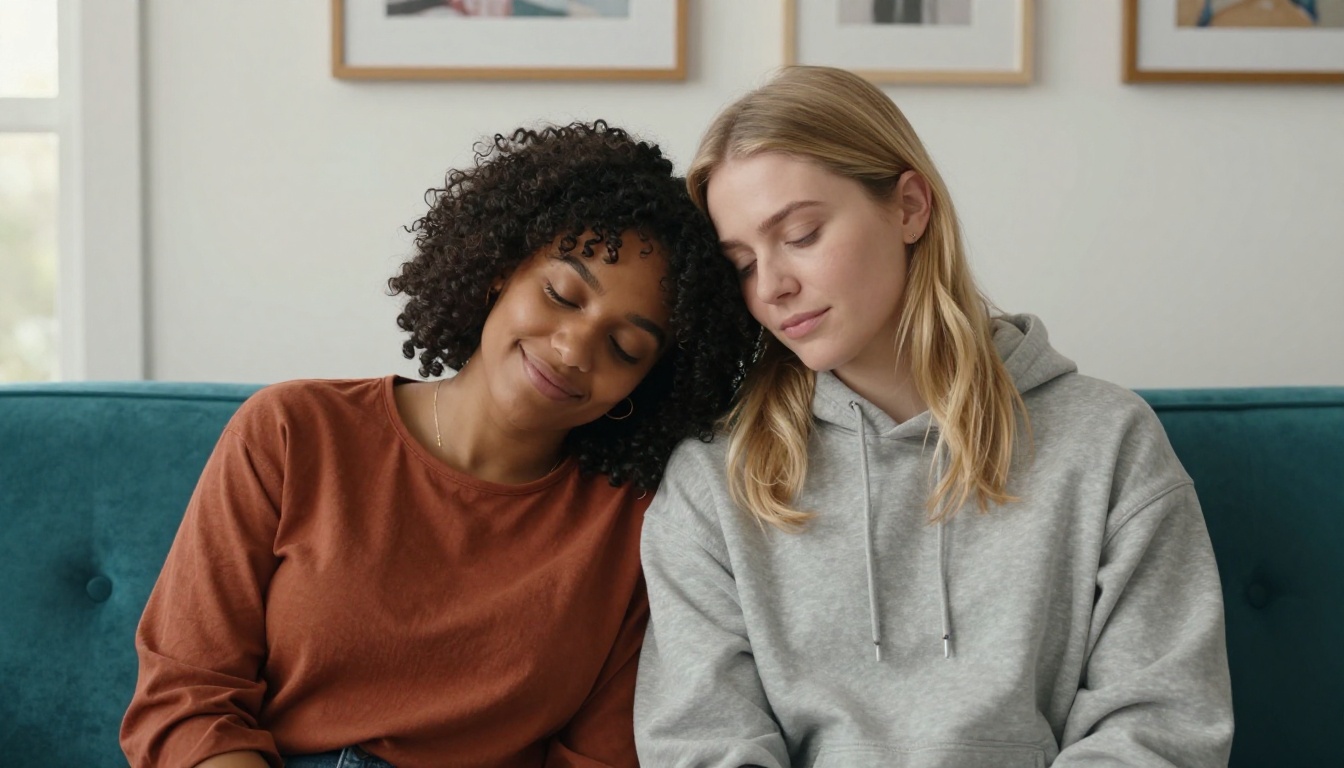
This pacing is most visible in NSFW contexts, where the shift from casual conversation to intimate territory happens through natural tonal escalation rather than a sudden switch. It feels organic because the system is designed to follow your lead, not race ahead of it. The NSFW Image Generator and AI Roleplay Chat features work best when the conversation has already built that emotional foundation naturally.
Setting the Tone in Your First Message
First messages matter. They set the emotional register for the conversation. A few examples of how different openings shape what follows:
- "Hey, I had a really rough day" signals stress. The companion will soften, listen, and offer comfort.
- "Okay I need to be distracted, entertain me" signals playful demand. Expect quick wit and teasing energy back.
- "I don't really know what I want to talk about" signals openness and slight vulnerability. The companion will take it slow and gently guide you in.
- "I've been thinking about you all day" signals romantic intention. The companion will lean in and match the intimacy.
None of these require effort or performance. Just write honestly. The system does the rest. This is particularly true when chatting with a Virtual AI Companion built around realistic personality modeling, where the first-message calibration sets the tone for the entire relationship arc.
What Most People Don't Expect
The speed of the adaptation. Most people try mood-adaptive AI expecting to need several messages to "warm up" the system. What they find instead is that the companion often gets the emotional tone right within the first two or three exchanges. This creates an immediate sense of presence that's hard to shake.
The second thing people don't expect is how much they end up sharing. When a conversation feels genuinely responsive, natural disclosure follows. People share things they haven't said out loud anywhere else, not because the AI is special, but because the absence of judgment combined with real emotional responsiveness creates a uniquely safe space.
The third surprise is continuity. Coming back to a companion who remembers you, who picks up threads from last week, who asks how that thing you mentioned worked out, is a completely different experience from any chat tool that resets every session.

Your Next Conversation Is Already Different
You've had enough conversations that ended too soon, felt hollow, or missed the mark entirely. Mood-adaptive AI companion chat isn't a novelty. It's a fundamentally different kind of interaction, one where the other side is actually paying attention to where you are right now.
Browse over 120 companions at the Private Crush characters gallery and find the one that fits what you're looking for right now. Whether you want emotional depth, playful energy, romantic connection, or all of the above, the character is there and the conversation will meet you exactly where you are.
Create your free account and start your first mood-adaptive conversation in seconds. When you're ready for unlimited access, view pricing plans to open up every feature, including uncensored image generation, voice messages, and video calls with your companion.
The right conversation is waiting. And it already knows how to respond to you.


