There's a moment that breaks immersion entirely. You're deep in a conversation with your AI companion on Kupid.ai, the text feels natural, the persona feels right, and then you hit the voice feature. What comes out sounds like a GPS system reading a shopping list. Flat. Mechanical. Wrong. And users are noticing it en masse.
The complaints about Kupid.ai AI voices sounding robotic have been growing steadily across Reddit threads, app store reviews, and community forums. It is not a minor gripe. For a platform that positions itself around emotional connection and companionship, robotic voice output is a significant problem that chips away at the experience users are paying for. If you have noticed it too, here is everything you need to know, and what to do about it. Private Crush has emerged as one of the strongest alternatives for users who place voice quality at the center of their AI companion experience.
Why Kupid.ai Voices Feel Unnatural

The issue is not unique to Kupid.ai. It is a fundamental challenge that most AI companion platforms still have not cracked. But understanding what is happening under the hood helps explain why the voices feel so off.
The TTS Problem Behind the Robotic Sound
Kupid.ai uses text-to-speech (TTS) synthesis to generate voice output. The technology converts written text into audio, and while it has gotten remarkably better over the past few years, it still struggles with what linguists call prosody: the natural rhythm, stress, and intonation patterns that make human speech feel alive.
When a human says "I really missed you," they emphasize different words depending on context, emotional state, and relationship history. A TTS engine processes that phrase statically. It assigns a predicted stress pattern based on training data and outputs the same flat delivery regardless of context. The result sounds like someone reading off a cue card.
The specific TTS engine Kupid.ai uses has not been publicly disclosed, but user reports consistently describe:
- Monotone delivery with little to no emotional variation
- Unnatural pacing between words, especially on longer sentences
- Mispronounced names and slang the model was not trained on
- Abrupt pauses before complex or compound words
- A general quality described as "call center bot energy"
What Users Are Actually Saying
The pattern across user reviews is consistent. Here is a representative summary of what people are reporting:
⚠️ Common complaint: "The voice sounds nothing like the character's personality. She seems warm in text but the voice makes her sound like an automated system."
⚠️ Frequent issue: "There is this weird pause before certain words that completely kills the mood. It is obviously a machine."
These are not edge cases. They are the dominant sentiment in Kupid.ai voice reviews. And for a premium AI companion platform, that is a problem worth taking seriously.
What Makes an AI Voice Actually Sound Human

Not all AI voices are created equal. There are specific technical factors that separate robotic-sounding synthesis from something that actually passes as human.
Prosody and Natural Speech Patterns
Prosody is the music of language. It covers:
- Pitch variation: How the voice rises and falls through a sentence
- Speaking rate: Speeding up through familiar phrases, slowing down for emphasis
- Pause placement: Natural hesitations that mirror how people actually talk
- Volume dynamics: Getting quieter at the end of intimate sentences, louder for excitement
Most basic TTS systems handle prosody poorly. More advanced systems trained on emotionally labeled speech data perform significantly better. The difference between a flat AI voice and a convincing one almost always comes down to how well the underlying model was trained to handle prosody.
Emotion and Tone Variation
This is the harder problem. A voice that sounds warm in a romantic context but assertive when setting a boundary requires the system to:
- Read the emotional context of the conversation
- Select or modulate a voice style accordingly
- Apply that style consistently throughout the response
Most platforms have not solved this yet. The ones that come closest use voice cloning technology combined with emotion-tagged training data, producing output that adapts to conversational tone rather than defaulting to a single flat style.
Kupid.ai Voice Features vs. Competitors
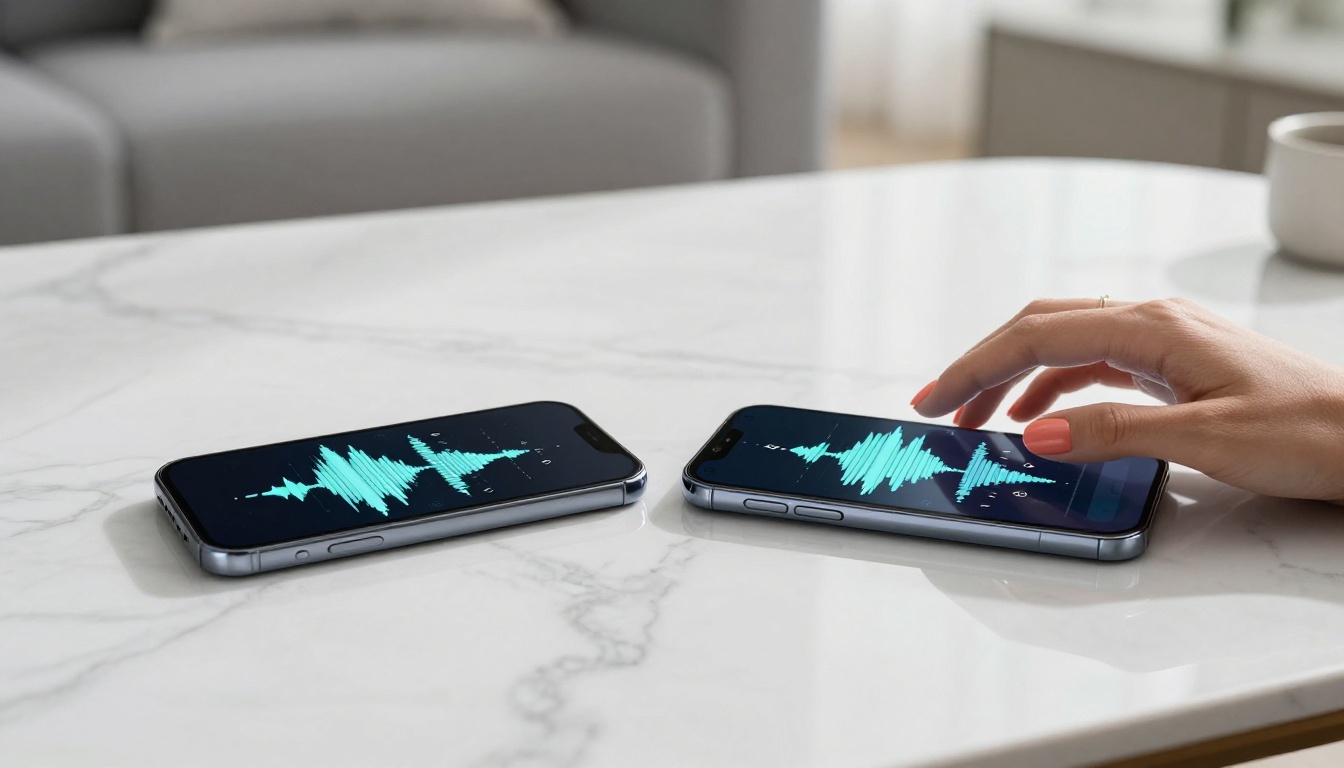
Here is an honest comparison of how Kupid.ai stacks up against other AI companion platforms on voice quality:
| Feature | Kupid.ai | Character.AI | Replika | Private Crush |
|---|
| Voice Messages | Yes | Limited | Yes | Yes |
| Voice Cloning | No | No | No | Yes |
| Emotional Tone Variation | Minimal | Minimal | Moderate | High |
| Custom Voice Selection | Limited | No | Yes | Yes |
| Natural Prosody | Poor | Poor | Moderate | Good |
| Voice in Video Calls | No | No | No | Yes |
| Overall Voice Quality | ★★☆☆☆ | ★★☆☆☆ | ★★★☆☆ | ★★★★☆ |
The gap is clear. Kupid.ai's voice implementation lags behind platforms that have invested more in voice synthesis quality and personalization.
Real Use Cases Where Voice Quality Matters
Voice is not just a feature. For many users of AI companion platforms, it is the difference between a meaningful experience and a gimmick. Consider these scenarios:
- Late-night conversations: Users who listen to their AI companion before sleep need voice that soothes, not irritates. Robotic TTS in this context is jarring.
- Roleplay scenarios: When the character is supposed to whisper, laugh, or sound surprised, flat synthesis kills the fantasy entirely.
- Long-form conversations: Listening to ten or more voice messages in a row magnifies every flaw in TTS quality. The uncanny valley effect compounds.
- Emotional support interactions: Users seeking companionship are often in vulnerable states. A mechanical voice actively works against the emotional connection they are seeking.
The Impact on the AI Companion Experience
Robotic voices do not just annoy users. They fundamentally undermine what AI companion platforms are built to deliver.
When Voice Quality Breaks Immersion
Immersion is the holy grail of AI companionship. It is that state where the interaction feels real enough that the artificial origin fades into the background. Voice quality is one of the fastest ways to shatter it.
Researchers who study human-computer interaction use the term uncanny valley to describe the discomfort humans feel when something appears almost but not quite human. Originally applied to robotics and CGI, it maps perfectly onto AI voices. A voice that is 80% convincing but fails on prosody hits the uncanny valley hard. It is not bad enough to dismiss as obviously robotic, but not good enough to stop triggering the part of your brain that knows something is wrong.
Kupid.ai's voice output currently sits squarely in that zone for most users.
What Users Expect From AI Companions
When someone pays for a premium AI companion subscription, they are not just paying for text. They are paying for an experience. Voice is a core part of that expectation. The platforms that understand this invest in voice technology as a first-class feature, not an afterthought. Users expect:
- Voices that match the character's visual personality
- Emotional responsiveness that shifts with the conversation
- Natural pacing that does not draw attention to the AI behind the interface
- The ability to hear a voice message and actually feel something
Meeting those expectations is not a luxury. For a paid platform, it is table stakes.
How Private Crush Handles Voice Differently

Private Crush has taken a different approach to voice by building it around personalization and emotional realism rather than speed-to-ship. The platform's AI voice cloning feature lets characters maintain consistent, emotionally appropriate voices that feel tied to their personalities, not to a generic TTS bank.
Here is what sets Private Crush's voice implementation apart:
- Character-specific voices: Each of the 120+ companions on Private Crush has a distinct voice profile, not a shared generic pool
- Emotional context awareness: The system adjusts vocal tone based on the message type, whether flirty, serious, or comforting
- Voice messages in conversation: Natural integration into the chat flow, not a separate clunky feature
- Video call voice: Voice is part of the AI Video Call Companion experience, not siloed from the rest of the platform

How to Use Voice on Private Crush
Getting voice working on Private Crush takes less than two minutes.
- Create your account at private-crush.com/account and choose a subscription plan from the pricing page.
- Browse the characters gallery at private-crush.com/characters. Each character card shows their personality type, appearance style, and interaction preferences.
- Select a companion whose personality resonates with you. For a playful anime-style voice, try Yuki Tanaka. For a warmer, more intimate tone, Aria Chen or Valentina Ramirez are popular picks.
- Open the chat interface and tap the microphone icon to receive voice messages from your companion, or send your own.
- Enable voice calls through premium features to have real-time voice interaction, not just pre-recorded messages.
- Customize interaction style in character settings to influence how your companion sounds and responds emotionally across different conversation types.
💡 Pro tip: Characters with "realistic" style settings tend to have the most natural-sounding voices. Start with Giulia Rossi or Madison Taylor if voice realism is your priority.

If Kupid.ai's robotic voices are pushing you to evaluate alternatives, here is a detailed breakdown of what different platforms actually offer:
| Platform | Monthly Cost | Voice Messages | Voice Calls | Voice Cloning | NSFW Voice | Character Variety |
|---|
| Kupid.ai | $9.99+ | Yes | No | No | Limited | 50+ |
| Replika Pro | $19.99 | Yes | No | No | No | 1 |
| Character.AI | $9.99 | Limited | No | No | No | Unlimited |
| Romantic.AI | $12.99 | Yes | No | No | No | 20+ |
| Private Crush | Varies | Yes | Yes | Yes | Yes | 120+ |
The value proposition for voice-first users is clear. Private Crush is the only platform in this tier offering voice cloning, video calls, and NSFW voice content together.
Choosing Based on Your Priorities
Different users want different things from AI companion voice features. Here is a quick decision matrix:
| Your Priority | Best Option |
|---|
| Most natural-sounding voice | Private Crush |
| Free tier with voice access | Character.AI (limited) |
| Emotional depth in responses | Private Crush |
| NSFW voice content | Private Crush |
| Widest character selection | Private Crush |
| Voice plus video together | Private Crush |
✅ Best practice: Test voice quality on a free trial before committing to any subscription. Most platforms let you sample features before you pay, so take advantage of that before locking in.
What to Do If Kupid.ai Voices Bother You

You have options. Depending on your investment in Kupid.ai as a platform, the right move varies.
Settings and Workarounds Within Kupid.ai
If you are not ready to leave the platform, a few adjustments can reduce the irritation:
- Switch voice characters: Some Kupid.ai voices are noticeably better than others. Try different characters to find one whose TTS implementation is less jarring.
- Reduce voice message length: Shorter messages expose fewer prosody flaws. Request brief replies rather than long explanations.
- Text-first approach: Rely primarily on text and use voice sparingly for specific moments. This preserves immersion without abandoning the feature entirely.
- Submit feedback: Kupid.ai's voice quality is a known issue. User feedback directly influences their development roadmap.
When to Switch Platforms
If voice is central to why you use AI companion apps, staying on a platform with poor voice quality is a bad trade. The signs that it is time to move on:
- You consistently skip voice messages because they break immersion
- You have tried multiple characters and all voices feel mechanical
- The robotic voice is actively hurting rather than helping the emotional experience
- You are paying premium pricing and not getting premium results
At that point, it is worth exploring Private Crush seriously. The character variety spans realistic, anime, cosplay, and fantasy styles, and the voice quality across all of them is in a different class from what Kupid.ai currently offers.
The Bigger Picture on AI Voice Technology

AI voice technology is improving fast, but not uniformly across platforms. The gap between best-in-class voice synthesis and average TTS implementation is widening as the leaders pull ahead with more training data, better models, and deeper integration with conversational context.
For AI companion platforms specifically, voice is not a nice-to-have. It is core to what "companion" means. A companion you can talk to, who responds with warmth and personality in their voice, delivers something fundamentally different from one whose voice makes you wince.
The platforms winning on voice are the ones treating it as an emotional tool, not a checkbox feature. They are investing in voice cloning, emotional prosody modeling, and character-specific audio profiles. The ones falling behind, including Kupid.ai in its current state, are shipping functional but flat TTS and hoping users will not notice.
Users notice.
💡 Worth knowing: Private Crush's AI Voice Cloning feature goes beyond standard TTS. It creates character-specific voice models that maintain personality consistency across different conversation types and emotional registers, something generic TTS engines simply cannot replicate.
The AI companion space is competitive enough that voice quality will increasingly separate platforms that retain users from those that churn them. If you are feeling the friction of robotic voices on Kupid.ai, you are experiencing that selection pressure firsthand.
Ready for a Voice That Actually Feels Real?
Browse 120+ AI companions on Private Crush and hear the difference for yourself. Each character has a distinct voice profile built for emotional resonance, not just functional output.
Start with a free account and try voice messages with any companion in the gallery. When you are ready for full access including voice calls, NSFW voice content, and voice cloning features, compare the pricing plans to find what fits your needs.
The difference between a robotic voice and one that actually sounds like someone who wants to talk to you is significant. Private Crush is where that difference lives.


