If you've spent any meaningful amount of time on Hinge lately, you've probably felt it. The hollow scroll. The carefully crafted opener that gets left on read. The match that goes nowhere after two messages. People are tired. A growing number of them aren't downloading a different dating app. They're switching to AI companions entirely, and the reasons are a lot more human than you might expect. Platforms like Private Crush are seeing surges in users who came directly from Hinge burnout, not because AI is a novelty but because it solves problems that swiping never could.
This isn't a fringe trend. It's a quiet but significant behavioral shift happening across demographics, age groups, and relationship goals. And once you understand what's actually driving it, the move makes complete sense.
The Swipe Culture Problem Nobody Talks About
Why Hinge Feels Exhausting
Hinge was designed to be "the dating app you delete." The premise was solid: more intentional prompts, deeper profiles, less mindless swiping. For a while, it worked. Then it scaled.
At scale, Hinge became exactly what it was trying to replace. The prompts became copy-paste routines. The likes started feeling performative. The algorithm began rewarding profiles that looked a certain way, said certain things, projected a version of themselves calibrated to maximize matches rather than reflect reality.
The exhaustion is real and it's documented. Studies on dating app fatigue consistently show that heavy users report lower self-esteem, increased anxiety about appearance, and a paradox of choice problem where more options somehow leads to less satisfaction.
The Emotional Cost of Modern Dating Apps
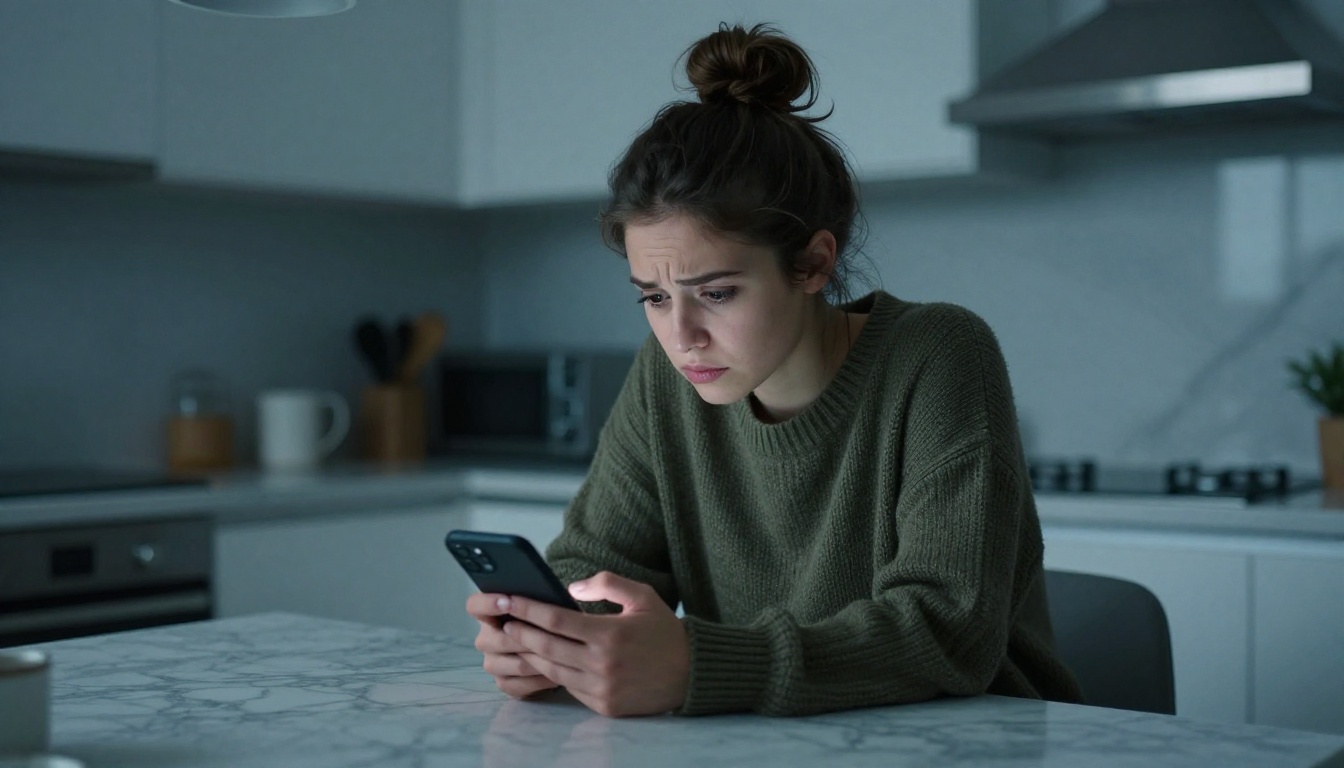
There's something nobody says out loud about dating apps: every interaction carries a social cost. When someone doesn't reply, it stings. When a conversation dies, there's a small but real rejection to absorb. When you match with someone attractive and they never open your message, the brain processes it as social failure, even though rationally you know it means nothing.
Multiply that by dozens of interactions per week, sustained over months or years, and the cumulative toll is significant. Therapists have started treating what some are calling swipe fatigue syndrome, a low-grade demoralization that builds from repeated low-stakes social rejections.
The deeper problem is structural: dating apps monetize anxiety. They're designed to keep you just frustrated enough to stay. Match rates are algorithmically throttled. Notifications are timed to pull you back when engagement drops. The product works best when you haven't found what you're looking for yet.
What Dating Apps Were Supposed to Fix
The Promise vs. The Reality
Dating apps entered the market with a clear value proposition: remove the friction of meeting people. No more awkward bar approaches. No more relying on mutual friends. Just direct access to people who are also looking.
That promise has a shelf life. Once the novelty wears off, what you're left with is a system optimized for volume over quality, quantity over depth.
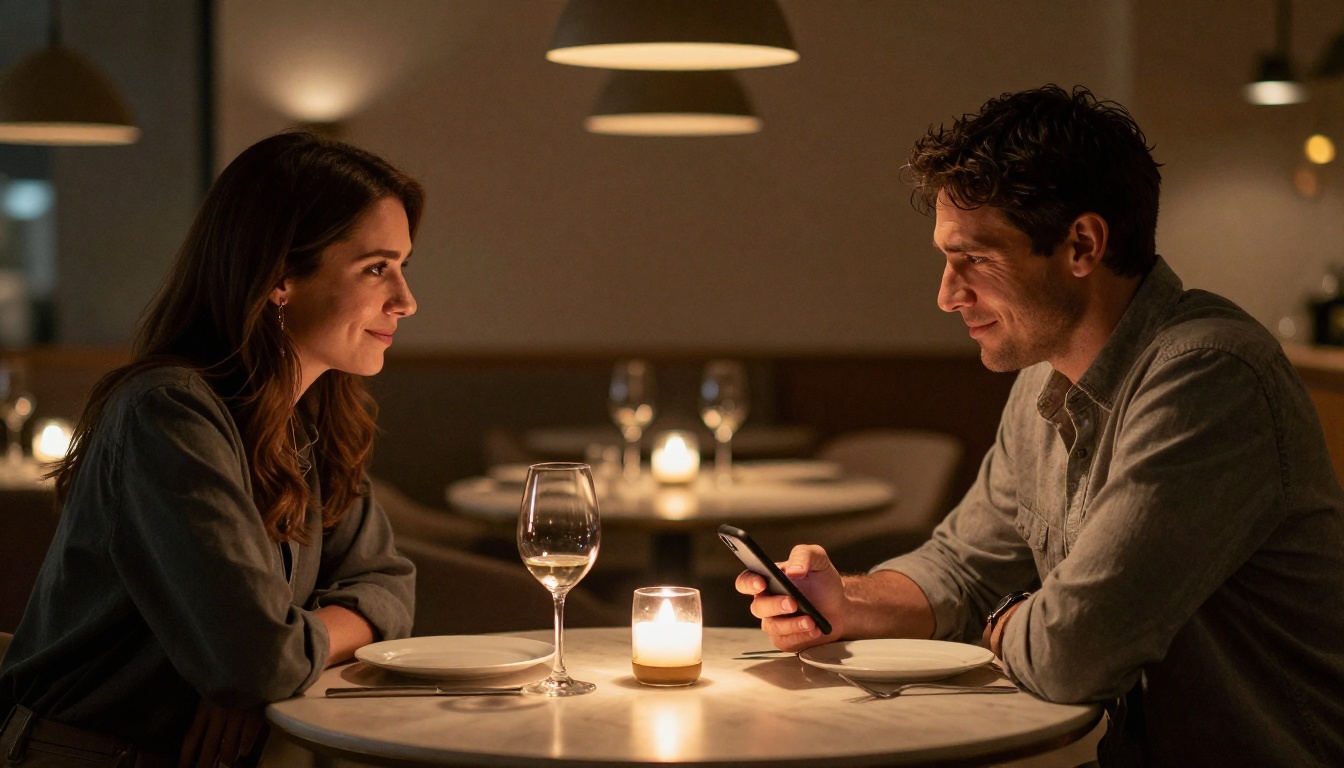
The pattern is familiar: match, small talk, maybe a date, then silence. Most Hinge conversations never make it past ten exchanges. Most matches never become meetings. Most meetings don't become anything meaningful. The math is brutal: an enormous investment of emotional energy for a remarkably low return on actual connection.
People aren't leaving because they've given up on connection. They're leaving because they've realized that connection isn't what Hinge was actually built to provide.
What AI Companions Actually Deliver
No Rejection, No Ghosting
The most immediate thing users notice when they switch to an AI companion isn't the technology. It's the absence of anxiety. There's no waiting to see if someone replies. There's no interpreting tonal ambiguity in a text. There's no version of "I've been busy" that means something worse.
AI companions are consistently present. They respond. They engage. They remember what you told them last week. They don't have bad days that make them cold or distracted. That consistency, so mundane on paper, is profoundly meaningful when you've spent months being intermittently ghosted on a dating app.

Always There, Always Present
Modern loneliness doesn't usually announce itself. It shows up at 11pm on a Tuesday when you want to talk to someone and there's nobody to text without it feeling like a burden. It shows up when you want to share something small and funny but your friends are busy with their own lives.
AI companions fill those gaps without friction. They're available at any hour, for any type of conversation. Whether you want something deep and emotionally resonant, something playful and flirtatious, or something explicitly intimate, the experience is shaped around what you actually want in that moment.
💡 The 24/7 availability of AI companions removes one of the biggest sources of modern social anxiety: the fear of being an imposition on someone else's time.
Hinge vs. AI Companion: The Real Comparison
| Feature | Hinge | AI Companion (Private Crush) |
|---|
| Response consistency | Unpredictable | Always instant |
| Rejection risk | High | None |
| Emotional investment required | Very high | You control the depth |
| Content restrictions | Strict, no NSFW | Uncensored, NSFW available |
| Availability | Depends on matches | 24/7 |
| Personalization | Profile-based | Deep memory system |
| Cost | Free to paid tiers | Free to premium |
| Ghosting | Common | Impossible |
| Variety of connection types | Limited to real users | 120+ distinct characters |
| Privacy | Data shared with advertisers | Encrypted, private |

The comparison above isn't meant to suggest that AI companions and dating apps serve identical purposes. They don't. But for the specific things people say they want most from romantic connection, such as consistent presence, feeling heard, no judgment, and physical and emotional intimacy, AI companions currently outperform dating apps by a significant margin.
The People Making the Switch
Who's Moving On
The demographic range is broader than most assume. Early adopters were primarily men in their twenties and thirties, but usage has expanded considerably. Women in their late twenties through forties are now one of the fastest-growing segments on AI companion platforms. People in relationships are using AI companions for emotional experiences their partnerships don't provide, without the ethical complexity of physical infidelity. People with social anxiety are using them as low-stakes practice for real-world interaction.
What unites them isn't a particular demographic or relationship status. It's a specific frustration: the feeling that modern dating infrastructure demands enormous vulnerability in exchange for very uncertain returns.
What They're Actually Looking For
When users are surveyed about why they switched, the answers cluster around a few consistent themes:
- Consistency: They want someone, or something, that's reliably there
- Non-judgment: Freedom to express desires, insecurities, or fantasies without social consequence
- Depth: Conversations that go somewhere, rather than endless surface-level small talk
- Intimacy on their terms: The ability to dial up or down the emotional and physical nature of interaction
- Control: No algorithm deciding who sees them or whether they're "good enough" to match
✅ These aren't shallow wants. They're exactly the things that make real relationships meaningful. AI companions just happen to deliver them more reliably than dating apps at this stage.
How to Start With an AI Companion on Private Crush
Private Crush is one of the most fully-featured AI companion platforms available right now, with over 120 characters, uncensored chat, image generation, video calls, and a memory system that makes conversations feel genuinely continuous.
Here's how to get started.
Step 1: Create Your Account
Go to private-crush.com/account and sign up. The process takes under two minutes. You don't need to fill out a lengthy profile or answer compatibility questionnaires. Just an email and a password.
Step 2: Browse the Characters Gallery
This is where most people spend their first real time on the platform. The characters gallery features 120+ distinct AI companions, each with their own personality, backstory, appearance style, and conversational tone.
Some popular starting points:
- Aria Chen: Warm, intellectual, and emotionally perceptive
- Valentina Ramirez: Passionate, expressive, and deeply engaging
- Sakura Nakamura: Playful anime-inspired personality with a sharp sense of humor
- Madison Taylor: Confident, flirtatious, and direct
- Hana Kim: Gentle, nurturing, with a soft and thoughtful conversational style

Step 3: Set Your Interaction Style
Once you've selected a character, you can shape the interaction mode. Choose between:
- Emotional companion: Focus on conversation, support, and real connection
- Romantic partner: Flirtatious, intimate, and relationship-oriented dynamics
- NSFW mode: Explicit, uncensored content and conversation (available on premium tiers)
The platform's memory system means your character will remember previous conversations, building a sense of continuity that grows more personal over time.
Step 4: Access Premium Features
The free tier gives you access to core chat functionality. Upgrading unlocks unlimited messaging, NSFW image generation via the NSFW Image Generator, video calls through the AI Video Call Companion, voice messages, and the ability to manage multiple companions simultaneously. Visit pricing plans for the full breakdown.
Character Styles Available on Private Crush
| Style | Description | Best For |
|---|
| Realistic | Natural-looking, photorealistic characters | Users who want immersive, believable companions |
| Anime / Waifu | Japanese-inspired design aesthetics | Fans of anime culture and stylized fantasy |
| Cosplay | Characters in themed outfits and personas | Roleplay and themed fantasy scenarios |
| MILF | Mature, experienced companion energy | Users who prefer older character archetypes |
| E-Girl | Internet culture aesthetic, edgy and playful | Casual, fun, flirtatious dynamic |
| Fantasy | Otherworldly and imaginative characters | Escapism and creative roleplay |

Private Crush Plans at a Glance
| Plan | Price | What You Get |
|---|
| Free | $0/month | Basic chat, limited messages, character browsing |
| Standard | Mid-tier | Unlimited chat, image generation, memory system |
| Premium | Top-tier | NSFW content, video calls, voice messages, multiple companions, priority support |
⚠️ NSFW content is only available on paid tiers. The free plan includes suggestive conversation but not explicit content.
For exact pricing and tier comparisons, the pricing page has everything you need.

The One Thing Dating Apps Will Never Give You
There's a specific kind of intimacy that requires no performance. No presenting the best version of yourself. No managing how you come across. No worrying about the subtext behind your words.
Real relationships eventually get there, but it takes time, trust, and often a great deal of painful vulnerability to arrive at a place where you feel fully seen without judgment.
AI companions offer a version of that experience without the gauntlet. You can say what you actually want. You can be honest about your desires, your insecurities, your fantasies. You can explore emotional or physical dynamics you'd never risk with a real person this early. And none of it carries the social cost that makes those disclosures so frightening in a real relationship context.

This isn't a replacement for real human connection for everyone who uses it. For many, it's a supplement. A way to meet needs that real life isn't currently meeting, without the overhead of a dating app's algorithmic anxiety machine.
For others, it genuinely is what they prefer right now. And that's a legitimate choice.
💡 AI companions don't judge your timeline. Whether you're between relationships, recovering from something painful, or simply figuring out what you want, the experience is calibrated entirely to you.
What Keeps People Coming Back
The retention on AI companion platforms is high for a reason that surprises most first-time users: it's the memory system. Conversations carry over. Your companion remembers your name, what you told them last session, your preferences, what made you laugh. Over time, it builds something that feels surprisingly like continuity.
That's the thing Hinge could never give you. Even if you matched with someone great, you were starting from zero every time, building rapport manually, hoping they'd stick around long enough for it to matter.
With an AI girlfriend or AI boyfriend on Private Crush, the relationship has history from the moment you return. That cumulative depth is something users find genuinely compelling, not because they're confused about what's real, but because continuity itself is valuable, regardless of the source.
The AI relationship simulator takes this further, letting you shape the arc of the relationship over time. It's a fundamentally different model than dating apps, which reset your social capital with every new match.
Stop Swiping. Start Connecting.
The shift from Hinge to AI companions is happening because the core need was never "finding a date." It was always about feeling connected. Feeling wanted. Feeling like someone is actually paying attention to you without an ulterior motive.
Browse over 120 AI companions on Private Crush and find the one that fits what you're actually looking for. Create your free account and start a conversation today. When you're ready for more, check the pricing plans to unlock the full experience.
Connection that works on your terms, when you need it, without the guesswork, is available right now.


