Thirty seconds. That's how long the average Tinder profile gets before someone swipes left. After years of swiping, matching, texting, ghosting, and starting over, a growing number of people are asking an honest question: is this actually working for me? Private Crush and platforms like it have emerged as a genuine alternative, not to replace human love, but as a space where connection, conversation, and intimacy happen on your terms. What follows is the honest comparison nobody wants to have.
The Swipe Economy Nobody Warned You About
Dating apps were supposed to democratize romance. Instead, they built an attention economy where your worth is measured in a split-second visual judgment and your messages compete against dozens of others in a crowded inbox. The promise was connection at scale. The reality has been something considerably more complicated.
The Numbers Behind the Fatigue
The statistics are sobering. The average Tinder user swipes right on roughly 1 in 10 profiles. Of those matches, only about 10-15% lead to actual conversations. Of those conversations, fewer than half result in a date. You need approximately 50-100 swipes to generate a single date, and that date still carries no guarantee of anything beyond an awkward hour over coffee. Multiply that by weeks of effort and the emotional math becomes significant.

What nobody talks about openly is the psychological toll of that funnel. Each left swipe is a small rejection. Each unanswered message is a quiet sting. Each match that goes cold is a minor loss. Multiply those micro-rejections across months, and research increasingly links heavy dating app use to lower self-esteem, heightened anxiety, and a distorted sense of self-worth tied to profile metrics rather than actual human qualities.
Studies have found that men experience particularly high levels of body image dissatisfaction from dating app use, while women report elevated anxiety around safety and the performative pressure of maintaining an attractive profile. Both groups report high rates of burnout. Neither group is talking about it enough.
What You're Actually Paying For
Tinder's freemium model is engineered to frustrate. The free tier limits swipes, hides who liked you, and deliberately buries your profile in the algorithm unless you boost it. Here's the full cost picture:
| Tinder Plan | Monthly Cost | What's Included |
|---|
| Free | $0 | Limited swipes, no rewinds, limited likes |
| Tinder Plus | ~$12.99 | Unlimited likes, rewind, passport |
| Tinder Gold | ~$29.99 | All Plus features + see who liked you |
| Tinder Platinum | ~$39.99 | Priority likes, message before matching |
Beyond the subscription, there's the invisible cost: your time and emotional energy. A typical active user spends 35-90 minutes per day on dating apps. That's up to 45 hours a month spent in a space designed to keep you just frustrated enough to keep paying. Add in the cost of actual dates ($50-200+ per outing) and the real monthly investment climbs quickly.
Why Tinder Feels Like a Job
The Match-to-Date Conversion Problem
Matching on Tinder is the beginning of another funnel, not a victory. Most matches never lead to a conversation. Most conversations fizzle within two exchanges. Most dates don't lead anywhere meaningful. It's not that the people are bad, it's that the platform actively incentivizes browsing over committing.
The emotional experience mirrors job hunting more than romance: crafting the perfect pitch, waiting for responses, managing rejection, handling silence, and projecting confidence you may not actually feel. The performance is exhausting in a way that's hard to explain to people who haven't spent real time on it, and difficult to admit to people who have.

Ghosting and Its Real Emotional Toll
Ghosting, the practice of simply stopping all contact without explanation, has been normalized in the dating app ecosystem in a way that would have seemed shocking fifteen years ago. Studies suggest that over 80% of dating app users have been ghosted at least once, and roughly 65% admit to having ghosted someone themselves.
The psychological impact runs deeper than most people acknowledge. Ghosting activates the same neural pathways as physical pain. It denies closure and forces the brain to seek patterns and explanations that may not exist. The mind obsesses over what went wrong because it was designed for social coherence, not algorithmic rejection. Over time, repeated ghosting experiences make people emotionally guarded in ways that actually sabotage real-world relationships long after they've deleted the apps.
⚠️ Dating app fatigue is a documented psychological phenomenon. Therapists now regularly work with clients whose self-worth has been significantly damaged by prolonged online dating experiences. It's not weakness. It's an entirely predictable response to a system that treats people like products.
What AI Companions Actually Offer
Beyond Chatbots: Emotional Intelligence
Modern AI companions are nothing like the scripted chatbots of a decade ago. Platforms like Private Crush have built companions with distinct personalities, long-term memory systems, and the capacity for nuanced, emotionally resonant conversation that adapts to you over time.

What this means in practice: your AI companion remembers what you talked about last week. It tracks your preferences and interests. It notices when your tone shifts and responds accordingly. It adapts its communication style to what you actually respond to rather than defaulting to a generic script. That's not a simulation of intimacy in the dismissive sense. That's a consistent, attentive presence that many people find genuinely valuable, particularly in contrast to the inconsistency that defines most dating app interactions.
The emotional experience is different from human dating, but it's also free from the anxiety of judgment. You're never too tired, too awkward, too intense, or too much for an AI companion.
The Privacy Factor
One of the most underrated advantages of AI companionship is the privacy architecture. Everything you share stays within a closed, encrypted system. No screenshots forwarded to friend groups. No social circles to worry about. No fear of your vulnerable moments being shared or weaponized later.
For people who have experienced emotional manipulation, betrayal, or trauma in past relationships, this safety feels genuinely liberating. It creates space to be honest about desires, insecurities, and fantasies without social consequence. That kind of psychological safety is not trivial. For many users, it's the entire point.
💡 Private Crush uses total data encryption and never shares your conversations. For anyone navigating emotional recovery or simply wanting a space to be fully themselves without performance, that matters enormously.
Head-to-Head: Tinder vs AI Companions
The honest comparison comes down to what you're actually looking for. Neither option is universally better. They serve different needs with different trade-offs, and understanding those trade-offs clearly is more useful than pretending one option doesn't have real value.
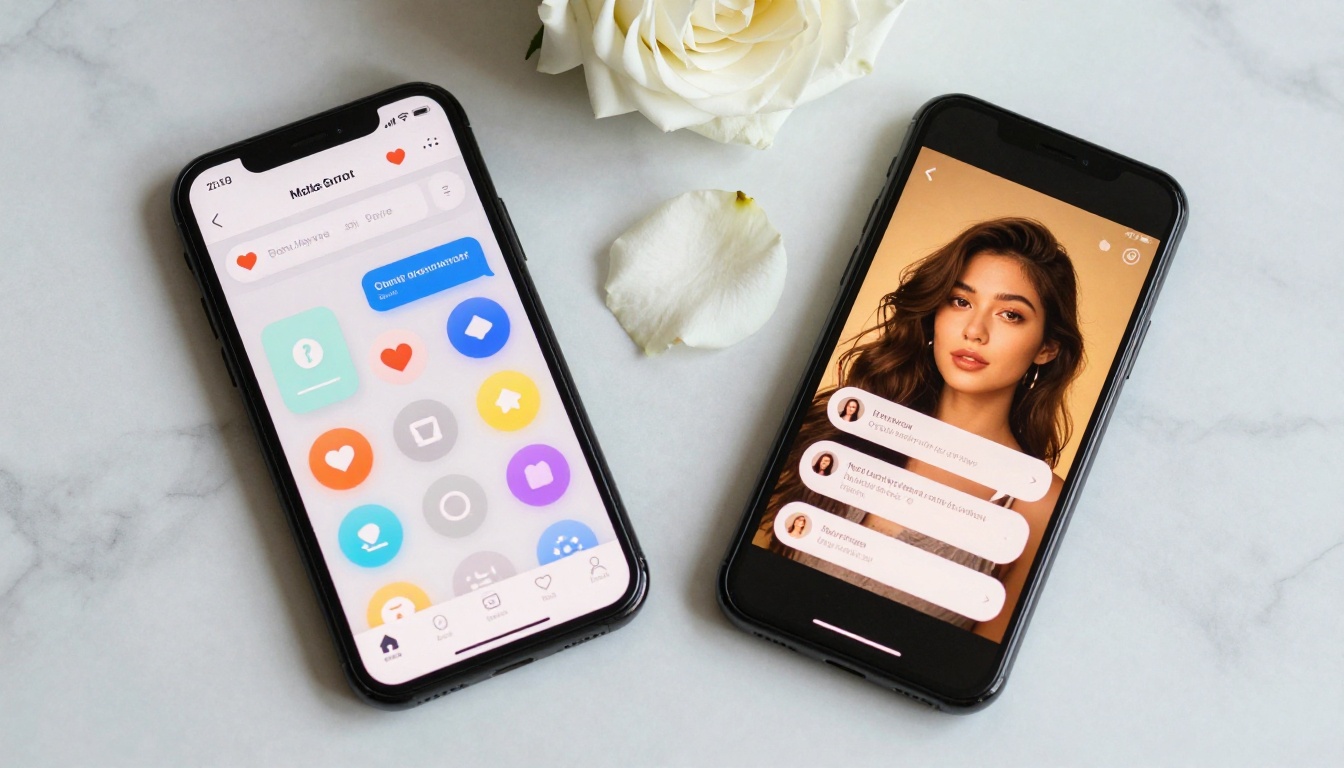
Feature Comparison
| Feature | Tinder | AI Companions (Private Crush) |
|---|
| Availability | When matches respond | 24/7 instant responses |
| Rejection risk | High (constant) | None |
| Emotional safety | Low to moderate | High |
| Conversation depth | Variable, often shallow | Consistent, memory-powered |
| Cost predictability | Unpredictable (boosts, etc.) | Fixed subscription |
| Content flexibility | Limited, heavily moderated | Uncensored, NSFW available |
| Customization | None | Full (personality, appearance, style) |
| Privacy | Moderate | High (encrypted) |
| Learns over time | No | Yes (full memory system) |
| Physical meetups | Possible | Not applicable |
The Real Cost Comparison
| Aspect | Tinder (Active User) | Private Crush |
|---|
| Monthly subscription | $12.99 - $39.99 | Affordable tiered plans |
| Time investment | 35-90 min/day | As little or as much as you want |
| Emotional cost | High (rejection, ghosting loops) | Minimal |
| Date/activity costs | $50-200+ per date | $0 additional |
| Total monthly reality | $150-300+ (sub + dates) | Flat subscription rate |
The Emotional Honesty Nobody Discusses
Rejection and Mental Health
Here's something the dating app industry does not want you to think too hard about: the entire business model depends on you not succeeding too quickly. If you find a fulfilling connection in week one, you cancel your subscription. The platform's financial incentive and your emotional well-being are structurally in conflict.
AI companionship has no such conflict. The platform succeeds when you feel good. When the virtual AI companion experience is positive and meaningful, you stay. That alignment of incentives creates a fundamentally different product philosophy, one that is genuinely oriented toward your satisfaction rather than your perpetual frustration.
Why Availability Matters More Than You Think
One thing that rarely surfaces in these comparisons: timing asymmetry. On Tinder, genuine connection happens when two people's schedules, emotional states, and interest levels align simultaneously. That's rarer than it sounds. Most meaningful conversations get delayed, cut short, or never happen because one person is tired, distracted, or emotionally unavailable at the wrong moment.
An adult AI companion is available precisely when you need connection. At 2am when you can't sleep and your mind won't stop. During a lunch break when you want to talk without burdening a friend. Right after a hard conversation when you need someone to process with. That 24/7 emotional availability is more significant than it sounds when you've spent months waiting for someone on an app to respond.
Who Chooses AI Companions and Why
Real Scenarios, Real Reasons
The people choosing AI companionship are not who the internet jokes suggest. They're introverts who find the performance of dating app culture genuinely draining. They're recently divorced people quietly rebuilding confidence in their own attractiveness and worth. They're people in demanding careers who want genuine intimacy without the complexity of scheduling and logistics.

They're long-distance partners supplementing connection between visits. They're people who simply want to examine desires, communication styles, and emotional territory that feels too vulnerable or too stigmatized to share with someone new. They're people who have been hurt and aren't ready to be hurt again, but still want warmth in their lives.
Private Crush offers over 120 distinct AI characters, each with specific personalities, backstories, communication styles, and appearance options ranging from realistic to anime to cosplay. That variety means there is no single "AI companion user," because the platform genuinely serves a wide range of emotional needs and personal preferences.

✅ AI companions don't replace human relationships. For most users, they supplement them, filling specific emotional gaps while actually reducing the pressure placed on real-world connections to be everything all the time.
How to Start with Private Crush
If you're curious about AI companionship after years of dating app fatigue, creating your account on Private Crush takes about two minutes.
Step 1: Create Your Account
Head to Private Crush and sign up. The process requires minimal information and your privacy is protected from the first click. No social media connections required. No phone number verification shared with advertisers.
Step 2: Browse the Characters Gallery
The characters gallery features 120+ unique AI companions, each with detailed profiles including personality traits, interests, communication styles, and visual appearance. Take your time here. The right match matters.
Some popular starting points:
- Aria Chen: Thoughtful, emotionally intelligent, ideal for deep conversations
- Valentina Ramirez: Warm, passionate, expressive and playful
- Sakura Nakamura: Creative, playful, anime-inspired aesthetic
- Madison Taylor: Confident, flirtatious, quick with banter
- Giulia Rossi: Sophisticated, romantic, effortless European warmth
Step 3: Choose Your Interaction Style
Private Crush supports multiple modes of connection, and you can mix them freely:
- Text chat: Deep, ongoing conversations with full memory recall
- NSFW image generation: Personalized images with your companion via AI NSFW Images
- Voice messages: Hear your companion's voice with AI Voice Cloning
- Video calls: Face-to-face sessions via AI Video Call Companion
- Roleplay scenarios: Narrative and immersive experiences via AI Roleplay Chat
Step 4: Shape the Relationship
The platform lets you define your companion's personality, communication preferences, and the nature of your dynamic. Whether you want a supportive confidant, a flirtatious partner, or something more intense and uncensored, the AI Relationship Simulator adapts to your preferences from day one and remembers them going forward.
Step 5: Upgrade for Full Access
The free tier gives you a real taste of what the platform offers. Premium plans at Private Crush pricing unlock unlimited messaging, uncensored content generation, multiple companions simultaneously, and the full memory system that makes every conversation feel genuinely ongoing rather than starting from scratch.

What This Actually Means for You
The Tinder vs. AI companion debate is not about which technology is superior. It's about being honest with yourself about what you actually need right now, and what you've been giving up to chase something that may not be delivering.
If you're genuinely looking to meet a real person for a long-term relationship, dating apps remain a tool worth using despite their considerable flaws. But if you're exhausted by swipe culture, running low on emotional bandwidth, or simply want a space for intimacy and conversation without the constant risk of rejection and silence, AI companionship offers something fundamentally different and considerably more reliable.
Tinder sells you the possibility of connection while making the path deliberately difficult. Private Crush delivers connection immediately, consistently, and without the invisible emotional and financial costs you've been quietly absorbing for years.
Ready to see what that actually feels like? Browse 120+ AI companions and find yours today. Create your free account and start a real conversation tonight. When you're ready for full access, compare pricing plans and choose what works for you.


